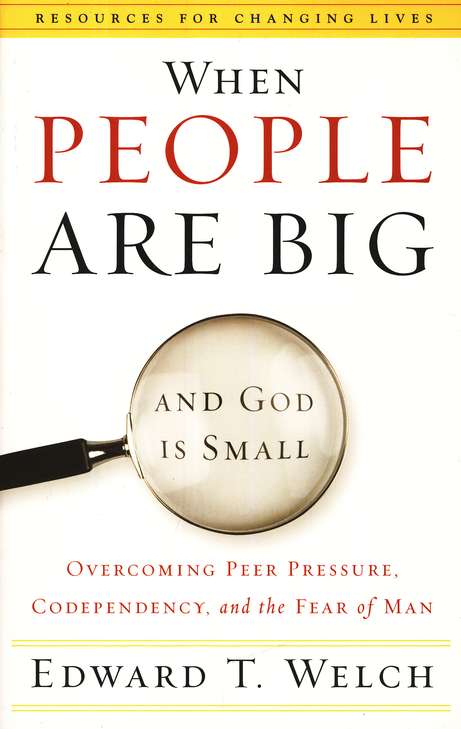
Applications from When People Are Big and God is Small by Edward T. Welch
What are the key principles of the selected reading?
- People Will See Me (23).
In seeing God and people rightly, as the author of this book asks, we all must ask ourselves, Whom will we fear (need, be controlled by)? Will we fear God or people? The biblical text which this principle draws upon is Proverbs 29:25, “Fear of man will prove to be a snare, but whoever trusts in the LORD is kept safe”.
This chapter speak on the Bible’s dominant question which is, why do we fear other people? There are three basic reasons given for why we fear other people. The first is, “We fear people because they can expose and humiliate us” (23). This is known as “shame-consciousness”, an exposure that makes one feel vulnerable, and in desperate need of covering or protection (23). In this ‘shame consciousness’, God sees our disgrace and other people become a threat to us because they can see it too (24). The next is that “We fear people because they can reject, ridicule, or despise us”. Lastly, “We fear people because they can attack, oppress, or threaten us”. These last two fears are a result of the sin of other people. In this, God’s answer to us in our shame is what Jesus has done on the cross. Jesus’ death, resurrection and ascension remove from us shame, covering us with His own righteous robes (34). As Christians, due to our still present sin nature, there will be times where we will still experience shame. At these times we must put our trust in God’s covering of us in Jesus Christ. We must bring ourselves to see the futility of the fear of man and of covering ourselves in worldly things.
- The World Wants Me to Fear People (73).
The biblical text which this principle draws upon is 1 John 2:15, “Do not love the world or the things in the world. If anyone loves the world, the love of the Father is not in him”. In this life we are naturally prone to fear man. We are drawn by the world’s pattern of the fear of man (73). In society we are encouraged blame others for the sins that we commit, never being responsible for our own actions. With the self-esteem movement there is also the encouragement to achieve success and to be affirmed in one’s actions, this ultimately leaves you depended on others (74). This fearing of man is a misunderstanding of who God is and who we are as His image bearers (79). In fearing other people, we fail to recognize the reality and depth of our sins. By doing this we disregard God and revere man as higher than Him (81). We as Christians should see the influences that the world brings on us in having us fear people, we should cultivate a response of seeing God for Who He is and extolling Him higher than man.
- Know the Fear of the Lord (95).
The biblical text to which this principle draws upon is Isaiah 33:6, “He will be the sure foundation for your times, a rich store of salvation and wisdom and knowledge; the fear of the Lord is the key to this treasure”. In overcoming the fear of others this chapter encourages us to know the fear of the Lord (95). Since us as humans are prone to experience the fear of man, we tend to take this fear to “idolatrous proportions” leaving out the worship of God (95). In escaping this fear, we must “know that God is awesome and glorious, not other people”. This fear is a fear not just of terror but of reverence, “a submission that leads to obedience, and it is interchangeable with ‘worship’, ‘rely on’, ‘trust’, and ‘hope in’” (97). As Christians we battle the opposition of the world, our flesh and the Devil when we seek to know and fear the Lord. The resistance of these things is in our hearts (100). When we make less of our obedience, saying to ourselves, “oh well at least I haven’t killed anyone today”, we are taking lightly the greatness of our sins and are not fearing God as we should. We should keep our eyes on God and His holiness and allow this to penetrate our every thought and every deed.
- Delight in the God Who Fills Us (169).
The biblical text which this principle draws upon is Ezekiel 18:22, “None of the offenses he has committed will be remembered against him”. With the knowledge of our sinfulness, there should be a balance of the knowledge of God. After having repented of sin we should listen to what God has said in His Word about Himself (169). After self-examination, God chooses to revel Himself as the “Welcoming One” (169). God rejoices in our repentance and promises not to look at our sins anymore. As Christians, we must not persist in self-condemnation when we sin but rejoice in God and know that He has covered our shame, protected us from danger, and accepted us in Christ (171). God has filled us with His love by the sealing of the Holy Spirit (171).
Serenity & Grace Counseling provides life transformative hope and peace through Christ centered Biblical Counseling. Seek us for counseling help in your greatest time of need.
Preliminary Registration Form | Serenity & Grace Counseling (serenitygracecounseling.com)
Additional Resources: Life Transformative Mind Renewal Workbook
Reference: Welch, Edward. T. When People Are Big And God Is Small: Overcoming Peer Pressure, Codependency, and the Fear of Man (Resources for Changing Lives). P &R Publisher 1997.
 Serenity & Grace Counseling